Original Satsivi
Homemade sauce recipe. This sauce used to be made without tomato paste, using only grated tomatoes, but now it's more practical and tastier to use tomato paste. If you've been to Georgia and tried Satsivi in local restaurants, you'll never forget its spicy and slightly hot flavor.
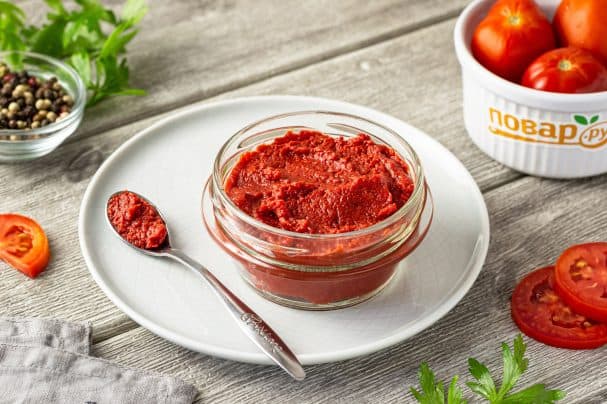
1. First of all, you need the right tomato paste. It should be thick, slightly grainy, and not run off the spoon like ketchup. If you find such paste, consider half the job done.
2. Take cilantro, chop it coarsely with a knife (some tear it by hand for authenticity, but it doesn't really matter). Don't worry about the size of the pieces. Set aside half of the chopped cilantro (this is important—it's the recipe's secret!), and put the other half into a bowl.
3. Take red chili pepper, chop it quite finely, and add it to the chopped cilantro (adjust the amount to your taste; for guests and tourists, we use half a pepper, for locals—whole pepper).
4. Finely chop basil and add it to the mixture. Transfer everything into a mortar.
5. Add freshly grated garlic (no garlic press—only grater), ground khmeli-suneli, and wine vinegar (a small secret: Georgians use wine vinegar, never table vinegar).
6. Take a pestle and thoroughly pound everything in the mortar together with the vinegar. You'll get an aromatic mixture, which you then mix with the tomato paste (without water for now).
7. Add the reserved uncrushed cilantro (that's why we set it aside) and finely chopped onion (a secret: never crush the onion in the mortar, or it will turn into mush).
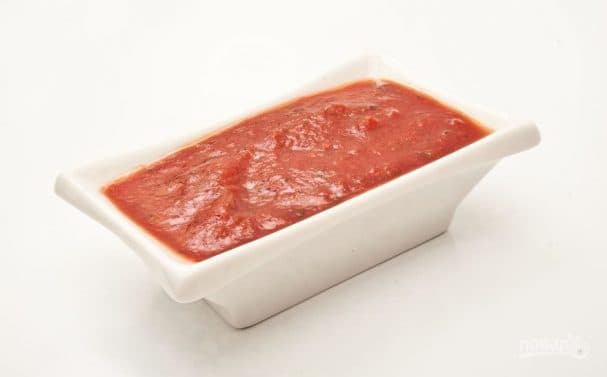
8. Pour water into the mixture in approximately a 1:1 ratio (adjust according to desired thickness—the sauce should be quite thick). Season with salt to taste. Use bottled water—still mineral water, spring water, or filtered water. Never use tap water (especially city water) or boiled water! Add water gradually, adjusting for taste and consistency. Usually 1:1 is enough, but it depends on ingredient quantities, so feel free to experiment.
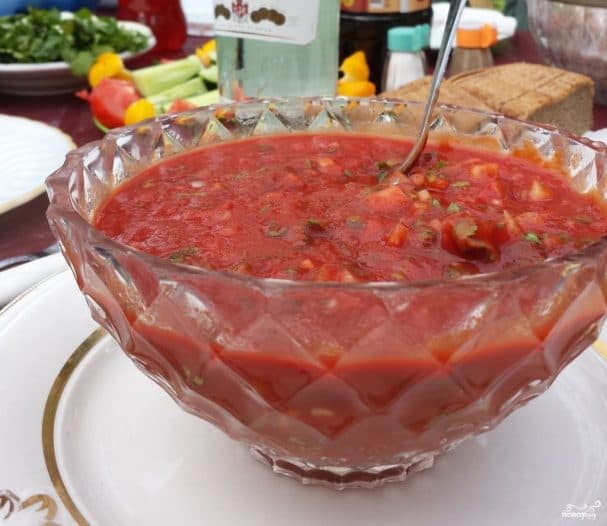
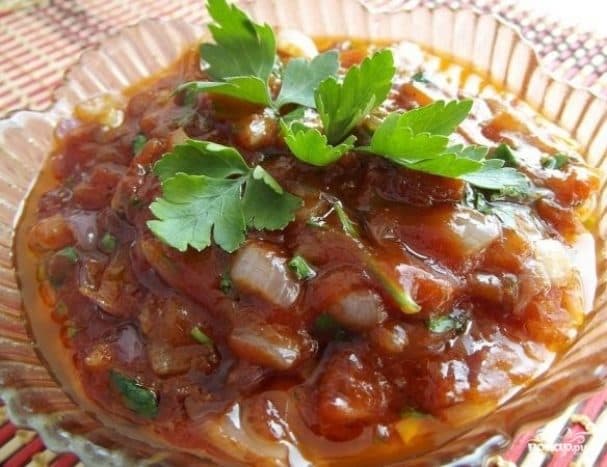
9. The sauce should form a small mound on a spoon and be thicker than regular ketchup from packets. Fresh cilantro leaves and onion cubes should float in the sauce—this is a distinctive feature of this recipe. Other recipes yield a uniform mass commonly found in seaside kebab places. This is our Version 1.
Version 2: In Samegrelo and Guria, some families and restaurants add grated apricot kernels to this sauce (secret: no walnuts). Didn't think you could eat them? Try it. Take the stone, crack it open, and inside you'll find a nut—delicious! Grate it and add 2 teaspoons to the sauce. This gives the sauce very interesting flavor notes. However, this is a local specialty; we usually prepare the sauce without nuts. Try both versions.
One more thing: this sauce contains no parsley, dill, broth, adjika, or other seasonings. Once you prepare it as described, you'll understand they're completely unnecessary.
Make a lot of sauce. We usually prepare a small pot for kebabs and serve it in a bowl. Dip shoti (Georgian bread) into the sauce, eat it with meat on the side. Some people even eat satsivi with a spoon. Garnish the sauce with fresh cilantro leaves on top.
This sauce is also an excellent substitute for ketchup or any tomato sauce with meat, pasta, dumplings, etc. Try it—you'll never want store-bought sauce again. Perfect with pasta, meat, and vegetables.
Read recipe→