
Easter Chocolate Egg (master class)
Description
The recipe won't take much time. You'll need 2 large egg molds to prepare both halves at once. You can also make small chocolate eggs—below I'll show these molds. To avoid leaving fingerprints when joining the two halves, work with latex gloves. Hazelnuts can be replaced with other nuts, dried fruits, flakes, or puffed rice. Serve chilled.
Instructions
- 1
Step 1
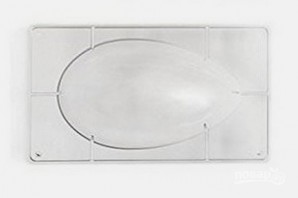
1. I'll immediately show the mold for the large egg. Its dimensions are 17.5x26 cm.
- 2
Step 2
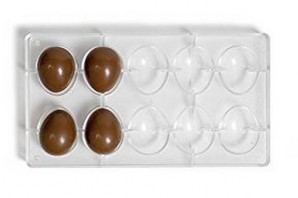
2. Here is a mold for small chocolate eggs (slightly larger than quail eggs). It's best to fill these chocolate eggs with various fillings—chocolate or cream, as you prefer. These small eggs can be coated with colorful glaze, beautifully decorating the dessert—it will look very attractive.
- 3
Step 3
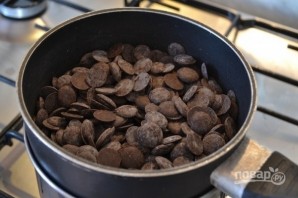
3. Let's start the master class. In the upper bowl over a double boiler, measure and place 500 g of chocolate. Make sure the water in the lower bowl simmers very gently. Under no circumstances allow even a single drop of water to get into the chocolate.
- 4
Step 4
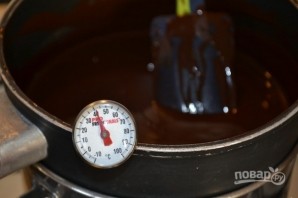
4. Melt the chocolate evenly, stirring with a silicone spatula, to a temperature between 40 and 45 degrees.
- 5
Step 5
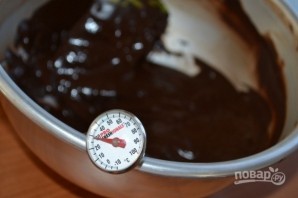
5. Immediately set aside 2/3 of the melted chocolate (in this case, 340 g), and remove the bowl with the remaining melted chocolate from the double boiler. Transfer these 2/3 of chocolate to another bowl, place it into a container with ice water, and cool it down to 29°C. It's best to use stainless steel utensils when working with hot chocolate. Constantly stir the cooling chocolate with a spatula, scraping it away from the sides of the bowl.
- 6
Step 6
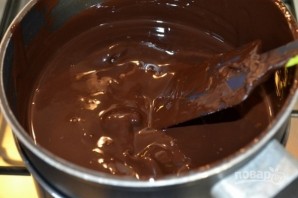
6. Now recombine the two parts of chocolate: the one cooled to 29 degrees and the one removed from the bain-marie. Mix thoroughly and monitor the chocolate's temperature: it should not exceed 33 degrees. The optimal temperature is 31 degrees. To test whether the chocolate has reached the desired state, spread a thin layer onto a spatula. If the chocolate sets within 3 minutes and remains shiny, it is ready to work with.
- 7
Step 7
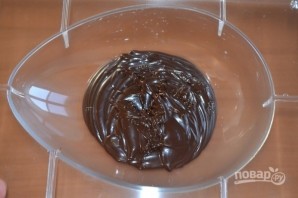
7. Pour the chocolate into the mold and quickly cover the entire surface. You can use either a brush or a tablespoon for this.
- 8
Step 8
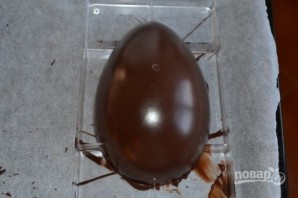
8. Turn the mold upside down onto a baking sheet lined with foil or parchment paper to let the excess chocolate drip off.
- 9
Step 9
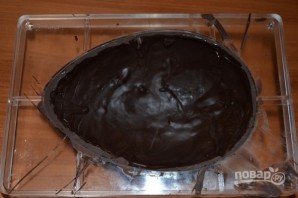
9. It's best if the edges of the chocolate egg halves are wide enough, as this will make them easier to join. If they don't turn out that way at first, you can build up the edges with extra chocolate, letting it set thoroughly. Clean off any excess chocolate from the edges to make them neat and smooth. If the kitchen is cool, you can leave the mold at room temperature. Otherwise, you may place the chocolate mold in the refrigerator, but only for 10 minutes—no longer—to prevent the chocolate from becoming moist.
- 10
Step 10
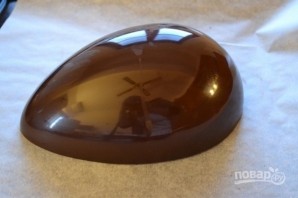
10. Now you can remove both halves of the chocolate egg from the mold. Look how the chocolate shines. This means everything was done correctly.
- 11
Step 11
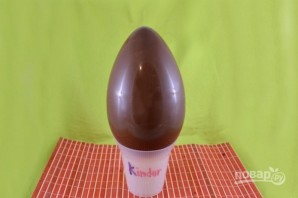
11. At this stage, if you join both halves together, you'll get a simple chocolate egg. It can be decorated with melted white chocolate, left as a festive decoration, or beautifully packaged and given as a gift.
- 12
Step 12
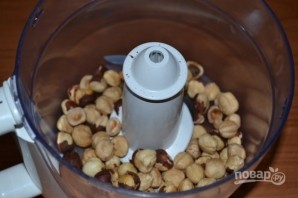
12. Now it's time for the nuts: chop them coarsely in a blender or, placing them in a sturdy plastic bag, crush them with a rolling pin—this works very well too.
- 13
Step 13
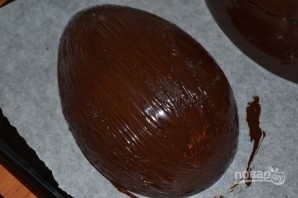
13. Melt the remaining 200 g of dark chocolate according to the recipe using a double boiler, and coat the halves of the chocolate egg with it.
- 14
Step 14
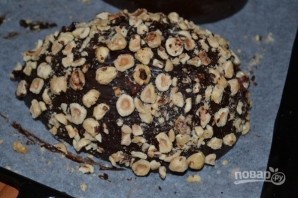
14. Sprinkle with crushed nuts and let the nuts set well.
- 15
Step 15
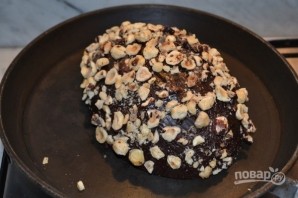
15. Final step: joining the two halves. To do this, you can put some melted chocolate into a piping bag and apply it to the edges using a nozzle with a small hole. Alternatively, place the chocolate egg halves edge-side down on a hot pan for 2 seconds.
- 16
Step 16
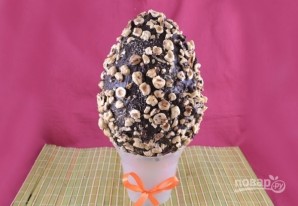
16. It remains to carefully join the two halves of the egg and hold them together for 2-3 minutes. The seam can be coated with melted chocolate and sprinkled with nuts. The large Easter chocolate egg is ready!
- 17
Step 17
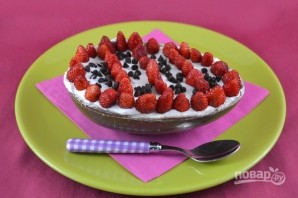
17. How else can you use the halves of a chocolate egg? For example, fill them with sweet cottage cheese cream, decorate with fresh berries or fruits, chocolate chips, nuts, and serve as a dessert.
- 18
Step 18
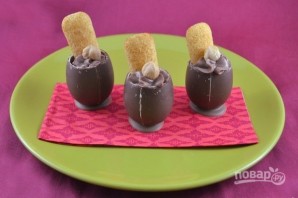
18. Medium-sized chocolate eggs can serve as "cups" filled with mousse, cream, jelly, and decorated to your taste. Serve them with small cookies or biscuit sticks.
- 19
Step 19
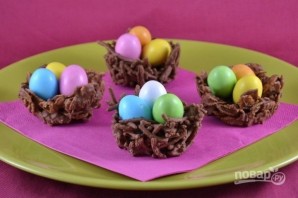
19. Small colorful chocolate eggs can be served for dessert in chocolate baskets.