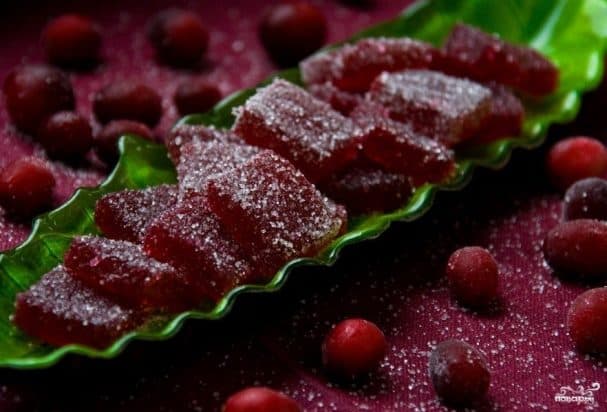
Cranberry jelly
Description
The dish is prepared without unnecessary complications. I make cranberry marmalade in the traditional way, without additional ingredients such as vinegar or spices. I've read that the very first marmalade (though it was made from oranges) appeared just like this—fruit pieces were simply covered with sugar and left in the sun. If the sun in your region is still hot, take advantage of it, and you'll get truly natural cranberry marmalade in every sense of the word! If the weather is no longer suitable for sun-drying, use your oven instead! Personally, no matter how much I intend to, I always forget to properly sun-dry marmalade during summer! And so I always rely on the oven. But before drying, the cranberry marmalade still needs to be cooked. Here's how: 1. First, turn the cranberries into a puree. Wash the berries and place them in hot water for 3–4 minutes. Then mash them thoroughly with a potato masher. 2. Pour the cranberry puree into a saucepan and add sugar. Cook until it reaches a marmalade-like consistency, stirring occasionally. 3. In the proportions I recommend, the marmalade will reach the right consistency when its mass is no more than one kilogram. You can use a scale or estimate the mass by eye. If you overcook it, the marmalade will turn into regular jam. 4. Then pour the cranberry marmalade into a baking dish and place it in the oven for an hour. The goal is not to bake, but to dry the marmalade, so be sure to monitor it, poke it, and taste it. When I made my first cranberry marmalade, I even cut it with a knife while it was still in the oven—I was so afraid of over-drying it. For those who decide to dry cranberry marmalade in the sun—it takes no less than three days! I wish you success! The ready dessert can now be served.